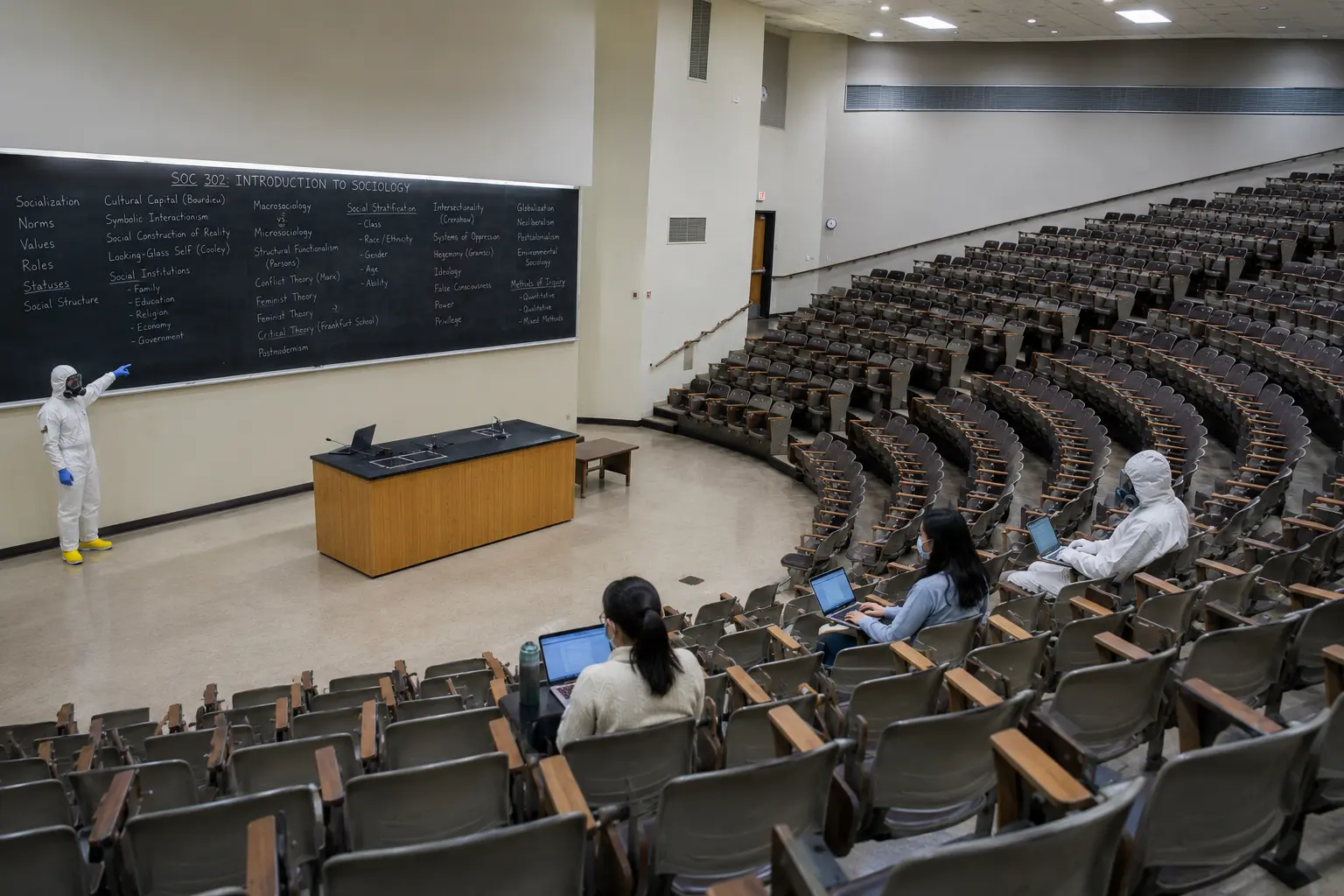
RALEIGH — NC State University announced Friday that it has received EPA approval to demolish Poe Hall, the campus building shuttered in November 2023 after the discovery of polychlorinated biphenyls, or PCBs, a class of toxic chemicals linked to cancer. Demolition is expected to begin “soon,” pending the completion of a construction planning process the university described as “ongoing.”
In the meantime, officials confirmed that Poe Hall will reopen for limited classroom use to minimize disruption to the academic calendar.
“Hell, we heard about the problems with this place for a decade before we tested the inside,” said one university administrator, seen outside Poe Hall in a red-and-white hazmat suit. “And then we told only the kids taking classes in the building at that time about what we found. Another semester in there shouldn’t hurt.”
“Fiscal sustainability requires us to maximize existing infrastructure,” said a university spokesman. “We are admitting students at a rate that frankly outpaces our ability to teach in buildings that have not been flagged by the EPA. Federal enrollment mandates, combined with the 40,000 people relocating to the Triangle area every single day, have left us with limited options.”
The reopened building will again host psychology and sociology courses, which were previously housed in Poe Hall before the building was closed. Since the closure, those students have been relocated to Roberts and Cox Halls, where several reported being deeply unsettled by the forced proximity to agriculture and chemistry majors.
“It’s been really hard,” said one sophomore member of Delta Zeta, who asked not to be named. “The smells alone. And I’m not talking about the chemicals.”
The psych, sociology and communications courses are heavily enrolled, with the student population consisting largely of sorority members who are not expected to attend class in significant numbers. For those who do, face masks — or preferably respirators along with full-body hazmat suits — will be recommended for the duration of the semester.
“It’s a precaution,” the spokesperson said. “Some people actually find it brings back good memories from 2020.”
Poe Hall has been closed for approximately two and a half years following testing that revealed PCB levels at 400 times the EPA limit throughout the building. The discovery prompted hundreds of reports of cancer, federal reviews, multiple environmental studies, and legal action.
The university said orange hazard fencing will go up around the building next week as crews begin preparation work, and classes are expected to resume shortly thereafter.